The DPSD Drupal Site (2018)
Projects | | Links: www.syros.aegean.gr
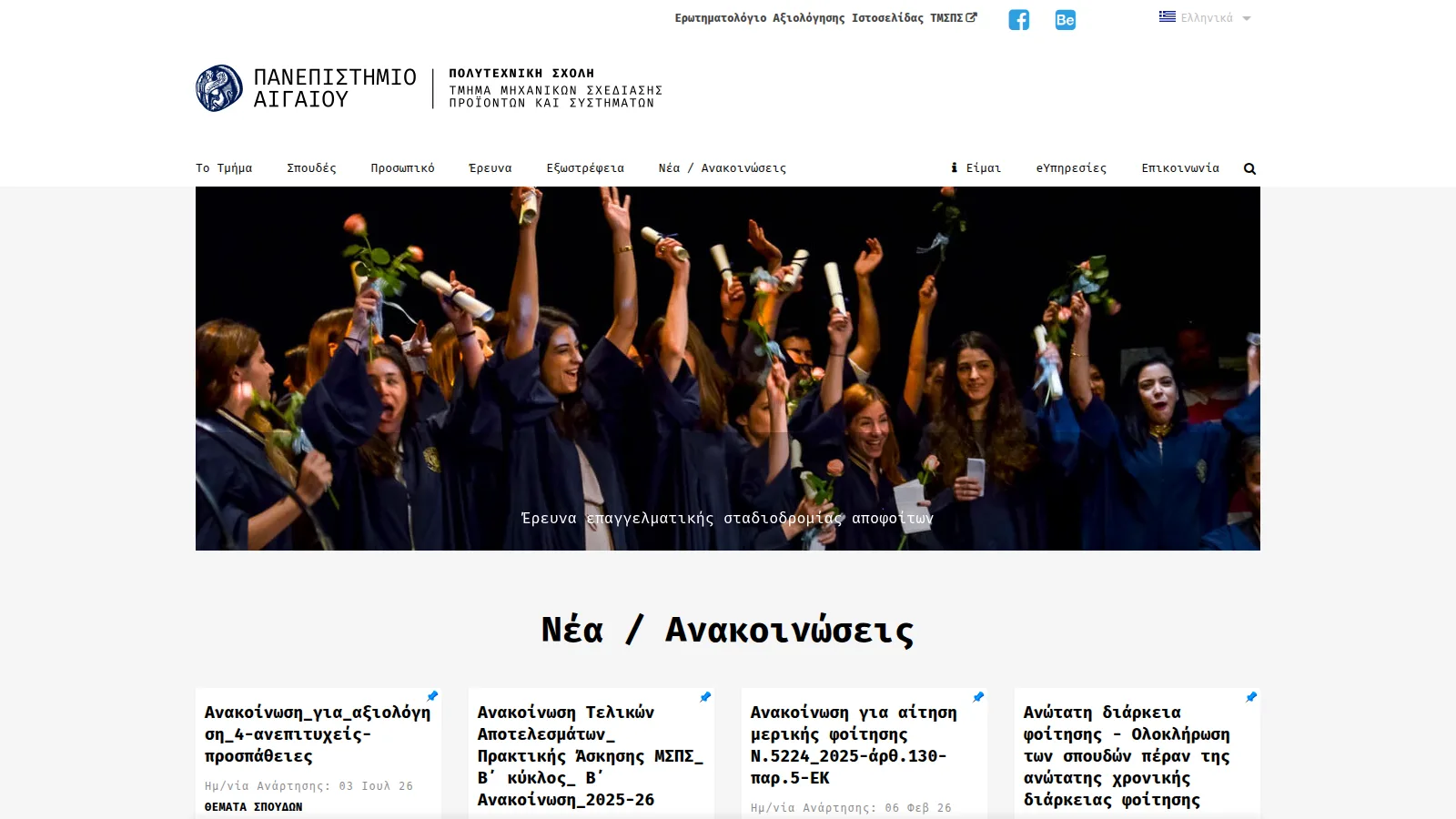
University department website on Drupal, in production since July 2018: bilingual, role-based self-service editing for staff and secretariat, LDAP sign-in, 30,000+ monthly page views, migrated from Drupal 8 to 9, with a static successor now in development.
Status: in production. The department’s official site since July 2018.
At a glance
| For | Department of Product and Systems Design Engineering, University of the Aegean |
| Stack | Drupal 8 CMS, later migrated to Drupal 9; LDAP sign-in, role-based editing |
| Build | Six months in 2018, two-person development team |
| Traffic | 30,000+ page views a month, 40,000+ users a year |
| In production | Since July 2018; I have run it ever since |
The problem
In 2018 the department’s website ran on ASP.NET and dated from the previous decade. It did not work on phones, staff pages were bare contact listings, and every announcement had to go through technical staff before it reached the students. The department needed a modern, bilingual site that its own people could keep current.
The build
With a fellow developer taking the design lead, I built the replacement in six months on Drupal 8: a commercial theme heavily customized (over 1,250 lines of custom CSS), more than 20 contributed modules, and a custom module where nothing existing fitted.
The heart of the site is self-service, a roles-and-permissions model that lets the department run its own site:
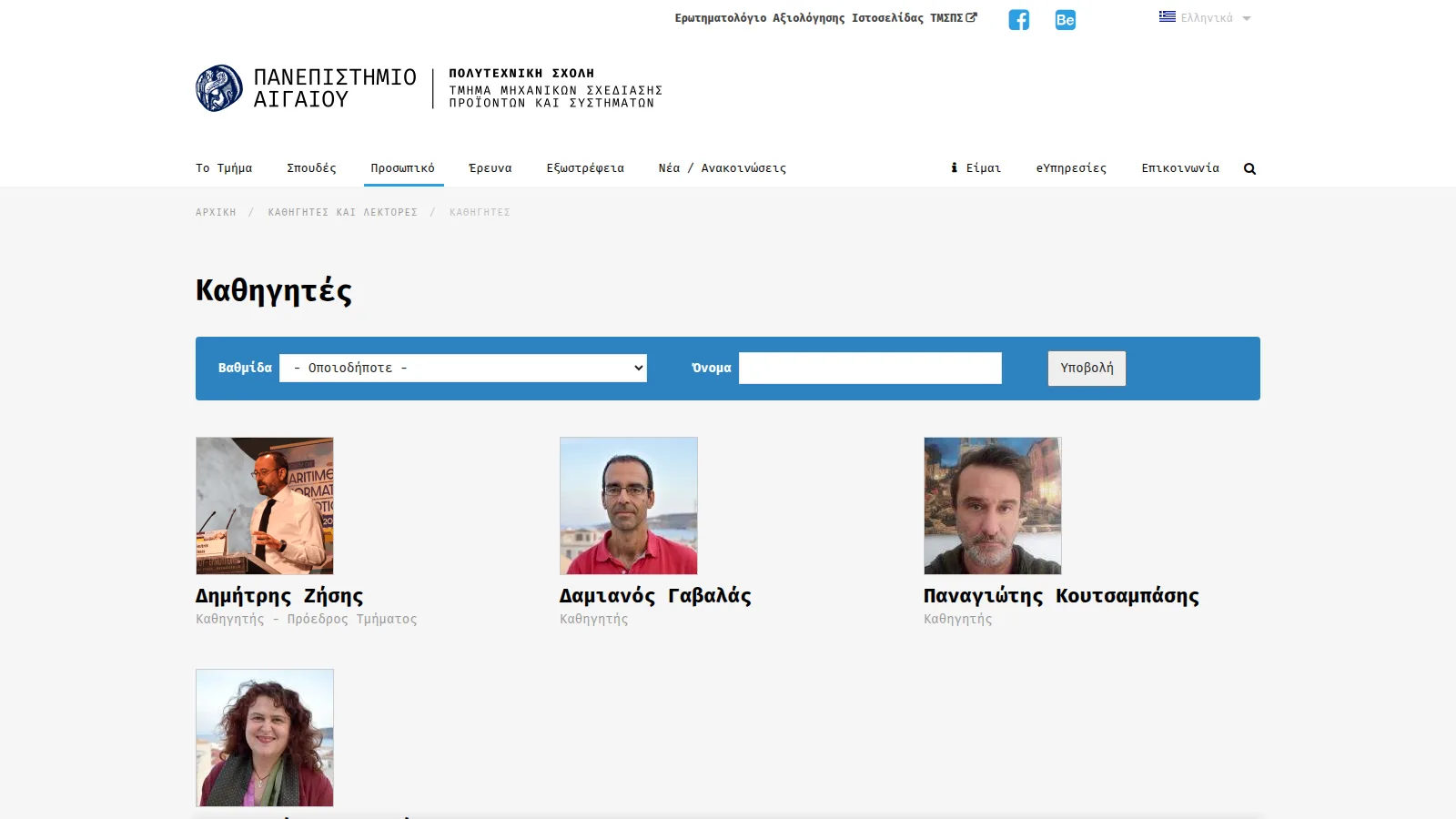
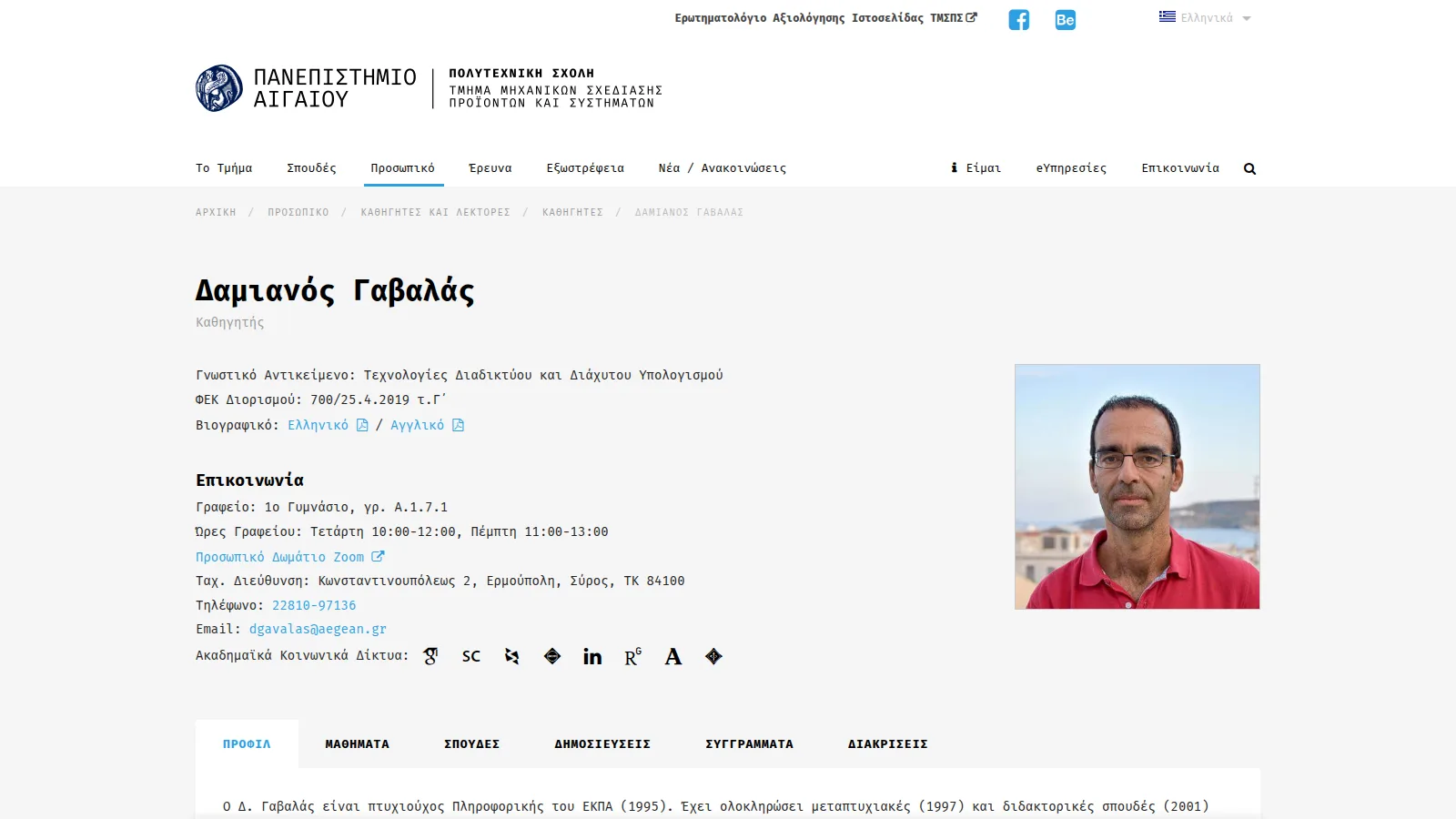
- Staff edit their own pages. 32 academic staff sign in with their existing university credentials (LDAP) and edit exactly what is theirs: their profile and their courses. Profiles offer nine content tabs, from publications to exhibitions, each appearing only when it has content.
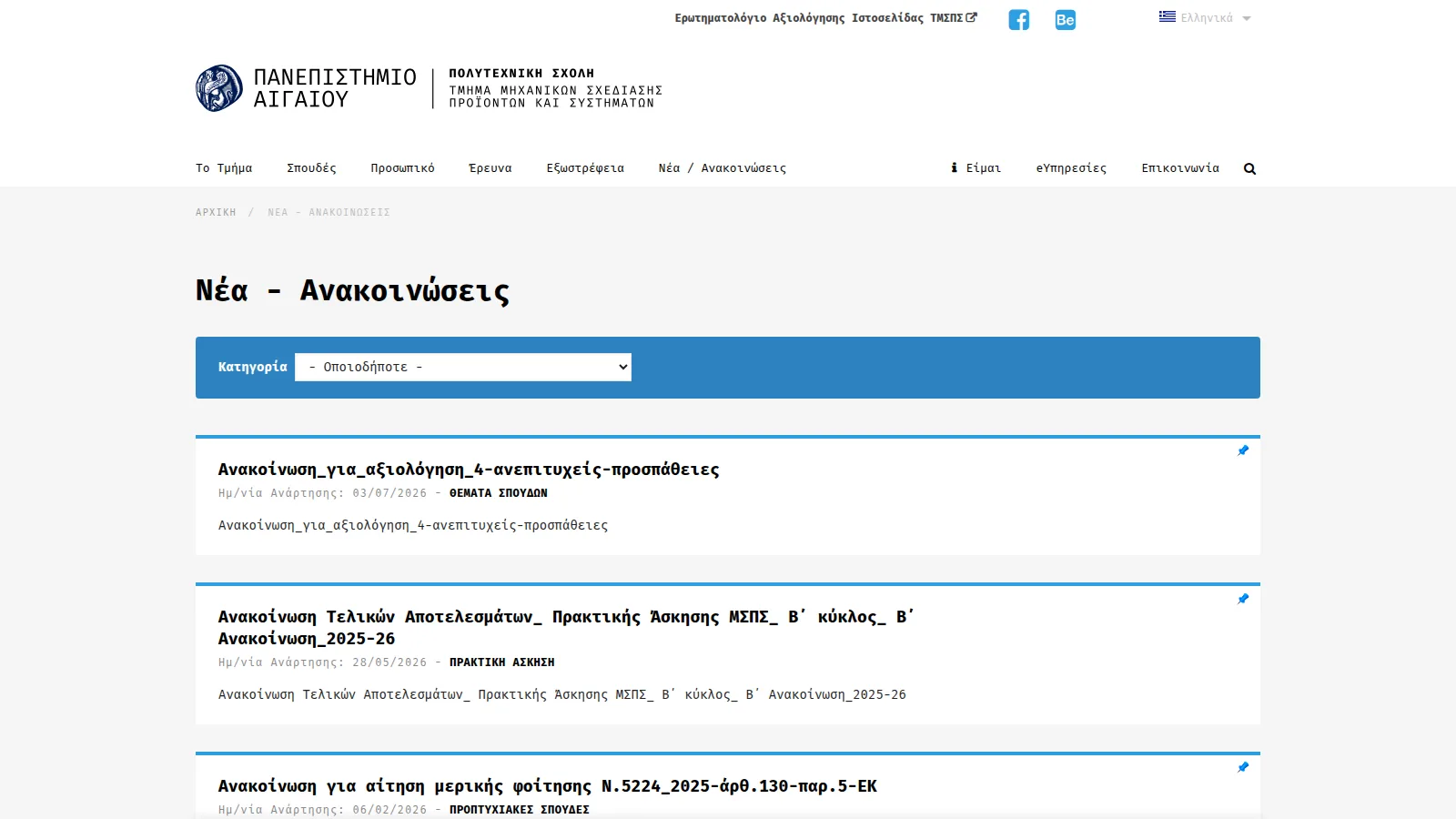
- The secretariat owns the announcements: categorized, optionally emailed on publication, and unpublished automatically when each one expires. No technician in the loop.
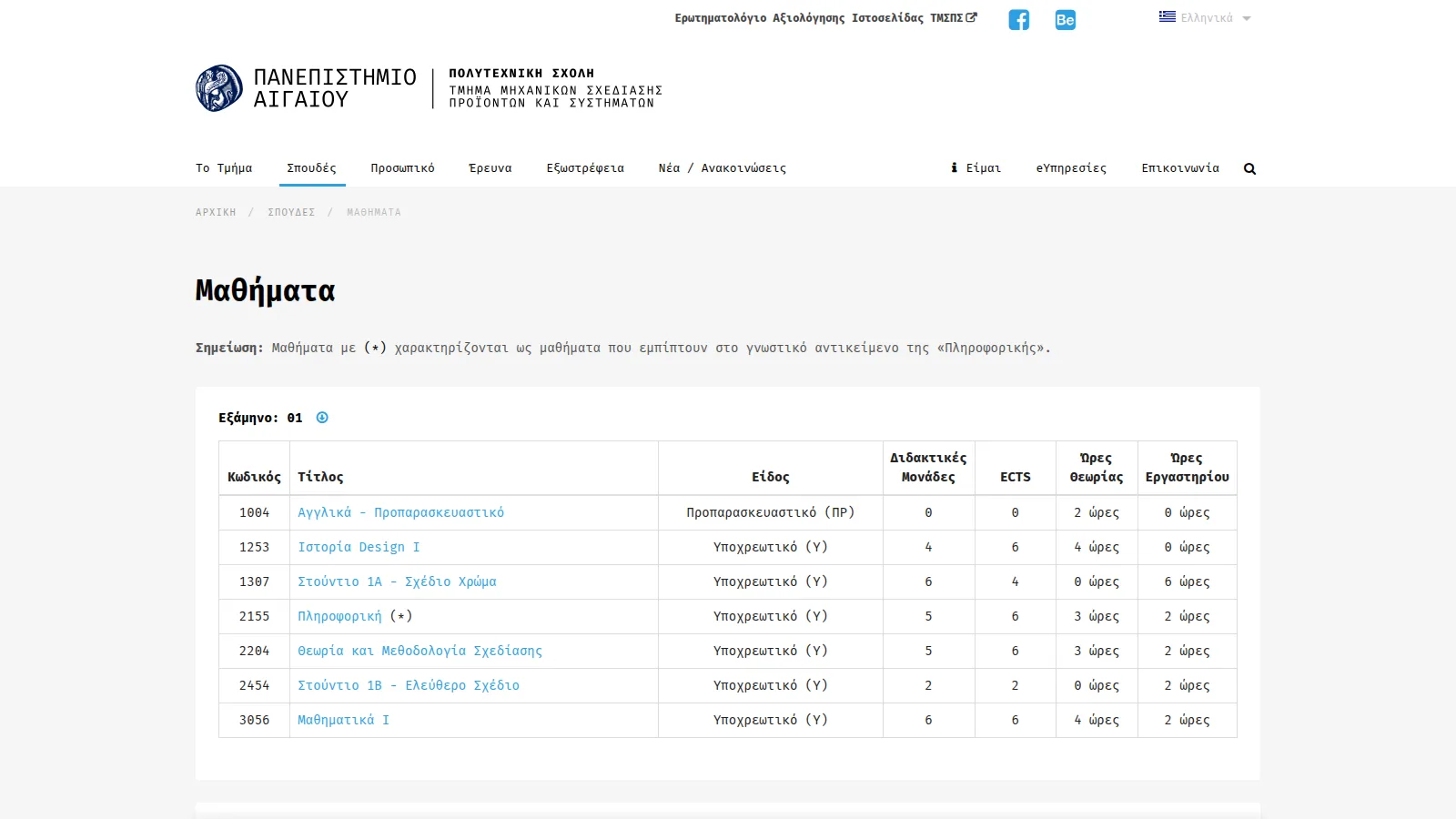
- 84 course pages with a structured layout (description, syllabus, learning outcomes, bibliography), each editable by its instructors.
- Bilingual by curation: the English site is a deliberate subset of the Greek one, carrying what matters to an international audience, with the language switcher appearing only where a translation exists.
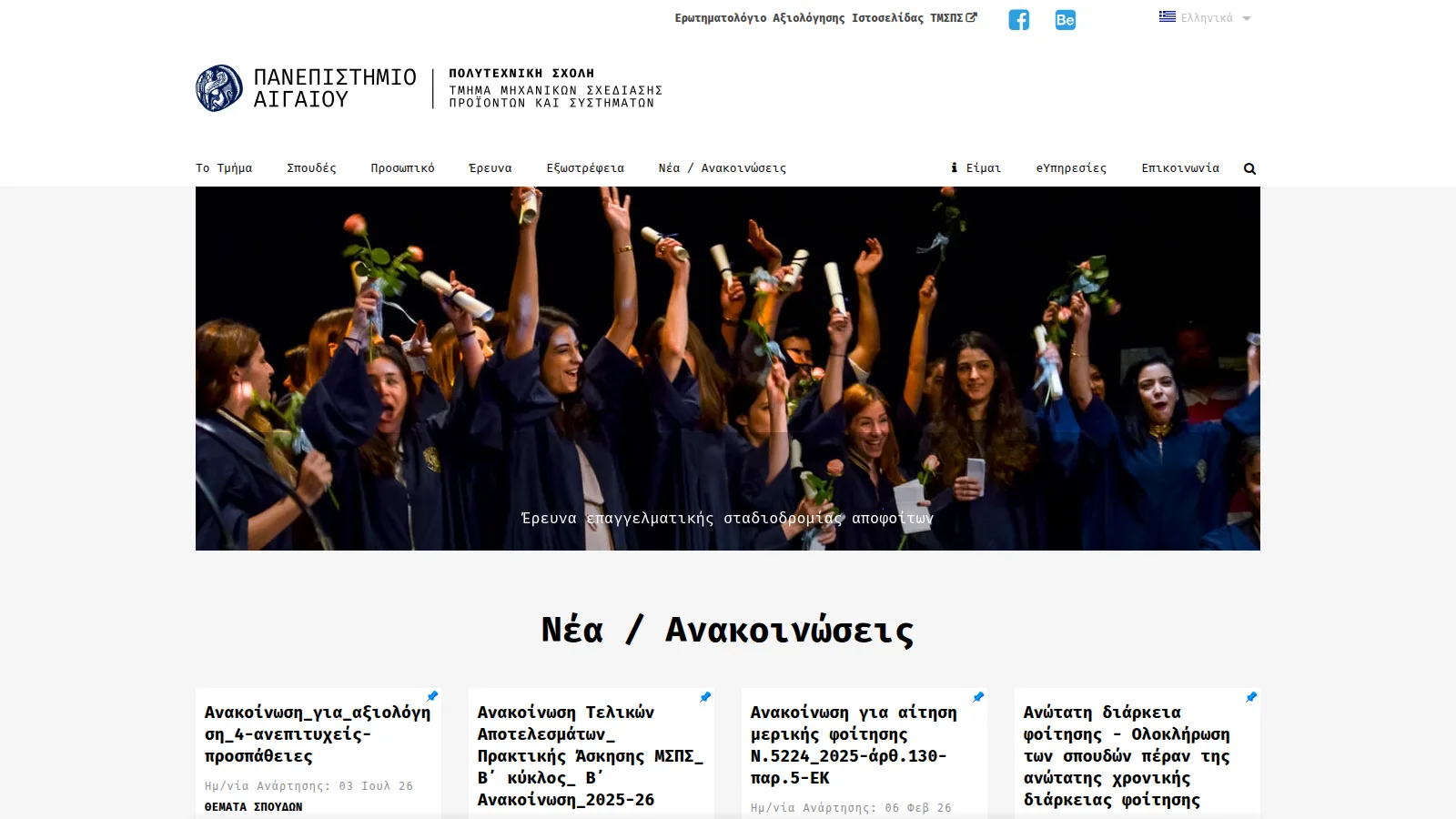
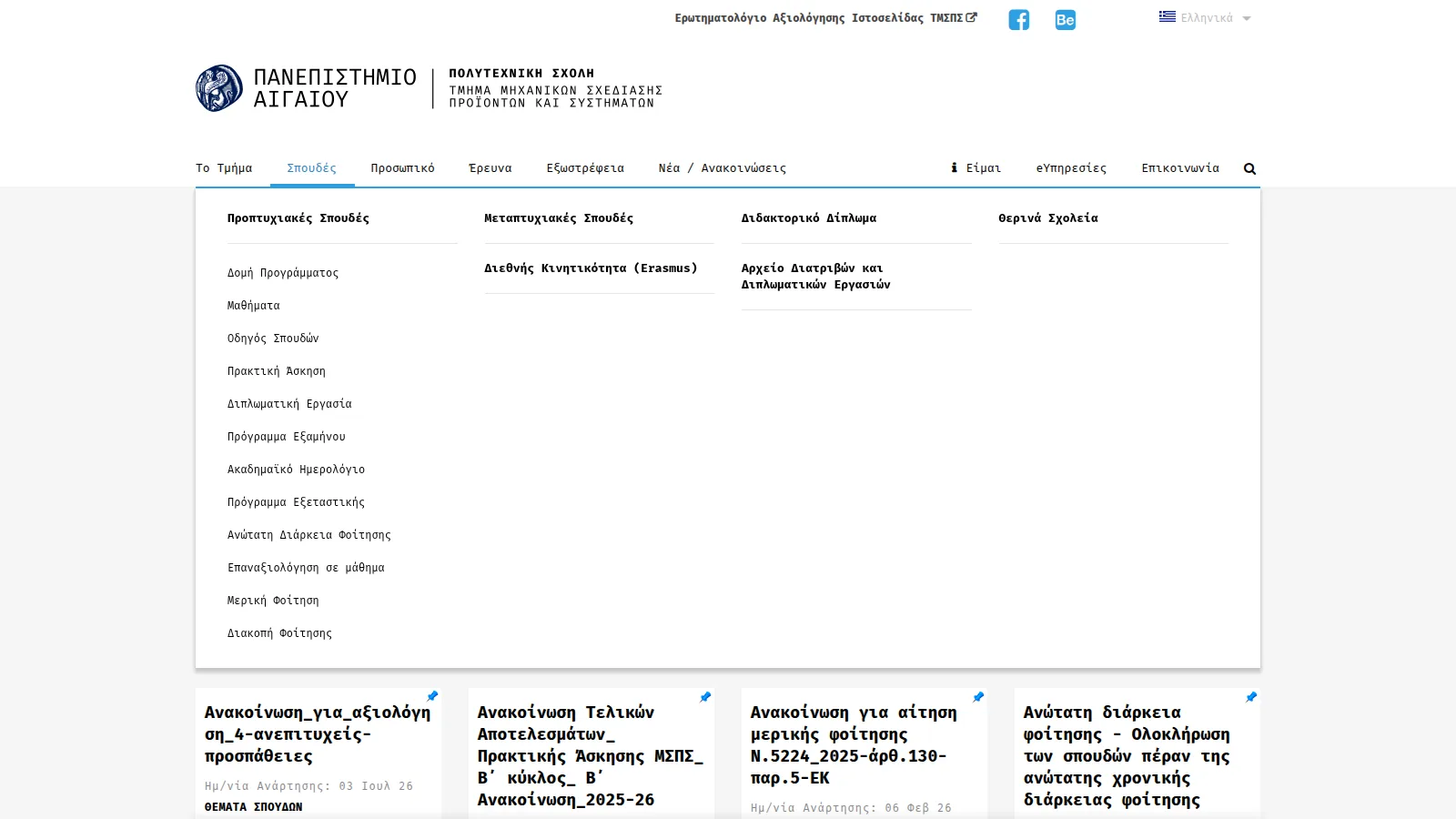
- Two ways to navigate: a thematic menu, and an audience menu (“I am a prospective student, a current student, a company”) that routes each visitor group straight to what it needs.
Eight years in production
The site launched in July 2018 and has served the department’s community ever since. Recent analytics show a mature, stable service:
- 30,000+ page views a month, over 40,000 users a year, peaking every October as the academic year starts.
- Over half of all traffic is mobile (54 percent); the old site did not work on phones at all.
- Roughly 500 pages of announcements published by the secretariat itself since launch, with no developer involved: the self-service model doing exactly what it was built for.
I have run the site through those eight years: user accounts and content support, fixes and additions as needs changed (including the remote-teaching fields added during the pandemic), and a full core migration from Drupal 8 to Drupal 9.
Screenshots
The successor
Eight years on, the CMS model is at the end of what it can economically deliver here. Drupal now assumes a Composer-only workflow that this site’s 2018 foundations predate, so the jump to Drupal 10 would mean rebuilding the project rather than upgrading it. I took that as the signal to change architecture instead of climbing another upgrade cycle: the department’s next site is a fully static Astro build, in development now, with the same self-service goals and none of the CMS’s moving parts.